chunnel.co.uk › Motorhome & Campervan
Eurotunnel by motorhome and campervan: prices and how it works
Taking a motorhome or campervan through the Channel Tunnel is easy. You drive into a high, spacious carriage at Folkestone and cross to Calais in about 35 minutes, staying with your vehicle the whole way.
Yes, you can take a motorhome or campervan through the Channel Tunnel on LeShuttle. It is one of the easiest ways to get a large vehicle to Europe: you drive straight into a tall carriage, stay with your motorhome for the 35-minute crossing, and drive off onto the French motorway in Calais. Because motorhomes are longer and taller than cars, they cost more and are booked by size.
Book your motorhome crossing
Motorhome fares depend on the height and length of your vehicle, so the only way to see your real price is to enter your dimensions. Use the price checker below to compare live Eurotunnel and ferry fares from Folkestone to Calais for your exact vehicle.

Can you take a motorhome on the Channel Tunnel?
Yes. Motorhomes and campervans are welcome on LeShuttle, and the tunnel is one of the most popular ways to take them to the continent. You do not need a special service or a separate booking: you book your motorhome just like a car, but in the right size category. You drive on at Folkestone and off at Calais, staying with your vehicle throughout.
This works for all common leisure vehicles: campervans, coachbuilt motorhomes, and larger A-class motorhomes, as long as they fit within the height and length limits and are booked correctly. If you are towing a caravan behind your car rather than driving a motorhome, see our dedicated caravan guide, as the rules and booking are slightly different.
How much does a motorhome cost on the Eurotunnel?
A motorhome or campervan costs more than a car because fares are based on the size of your vehicle. There is no fixed surcharge, but our own price checks reveal a clear pattern: the extra you pay depends heavily on the day you travel. On a quiet weekday the camper premium is small; on a busy weekend it can almost double the fare. Here are real comparisons we ran for a mid-sized campervan (around 5m long, 1.8m high) against a car on the same crossing.
| When | Car | Campervan (~5m) | Difference |
|---|---|---|---|
| Thursday (off-peak) | €154 | €195 | +€41 · about 1.3× |
| Weekday | €204 | €305 | about 1.5× |
| Weekday | €220 | €330 | about 1.5× |
| Weekend (peak) | €272 | €523 | +€251 · about 1.9× |
Real price comparisons for a mid-sized campervan versus a car on the same crossing. The camper premium is smallest on quiet weekdays and largest at peak weekend times. Larger motorhomes cost more again. These are examples only: enter your vehicle's exact size in the booking module above for your real fare. See car fares in detail on our tickets and prices page.
The high carriages: easy to drive into
One thing that puts people off taking a big vehicle abroad is the worry about fitting. On LeShuttle this is not a problem. Motorhomes and campervans travel in the tall single-deck carriages, which are high and wide, and easy to drive straight into. Staff guide you in, and there is plenty of room.
Unlike a ferry, where you reverse and manoeuvre into tight parking decks, on LeShuttle you simply drive forwards into the carriage and forwards out the other end. For a large motorhome, that makes the tunnel far less stressful than the ferry.
Can you take a motorhome on Eurostar?
No. Eurostar is a passenger-only train and cannot carry vehicles of any kind. To take your motorhome or campervan through the Channel Tunnel you need LeShuttle, the Eurotunnel car train, from Folkestone to Calais. If you searched for “Eurostar motorhome”, LeShuttle is the service you actually need. See our Eurostar guide.
How it works: driving your motorhome onto the train
The process is the same as for a car, just in a taller carriage. Here is what to expect.
- At check-in, your booking and passports are scanned. Make sure you booked the correct vehicle size.
- Follow the lane signs. Taller vehicles are directed to the high single-deck carriages.
- Drive forwards into the carriage as guided by staff. Apply the handbrake and leave it in gear or Park.
- During the 35-minute crossing you stay with your motorhome. You can step out and stretch your legs.
- On arrival in Calais you drive straight forwards off the train and onto the A16 motorway.
Rules for motorhomes and campervans
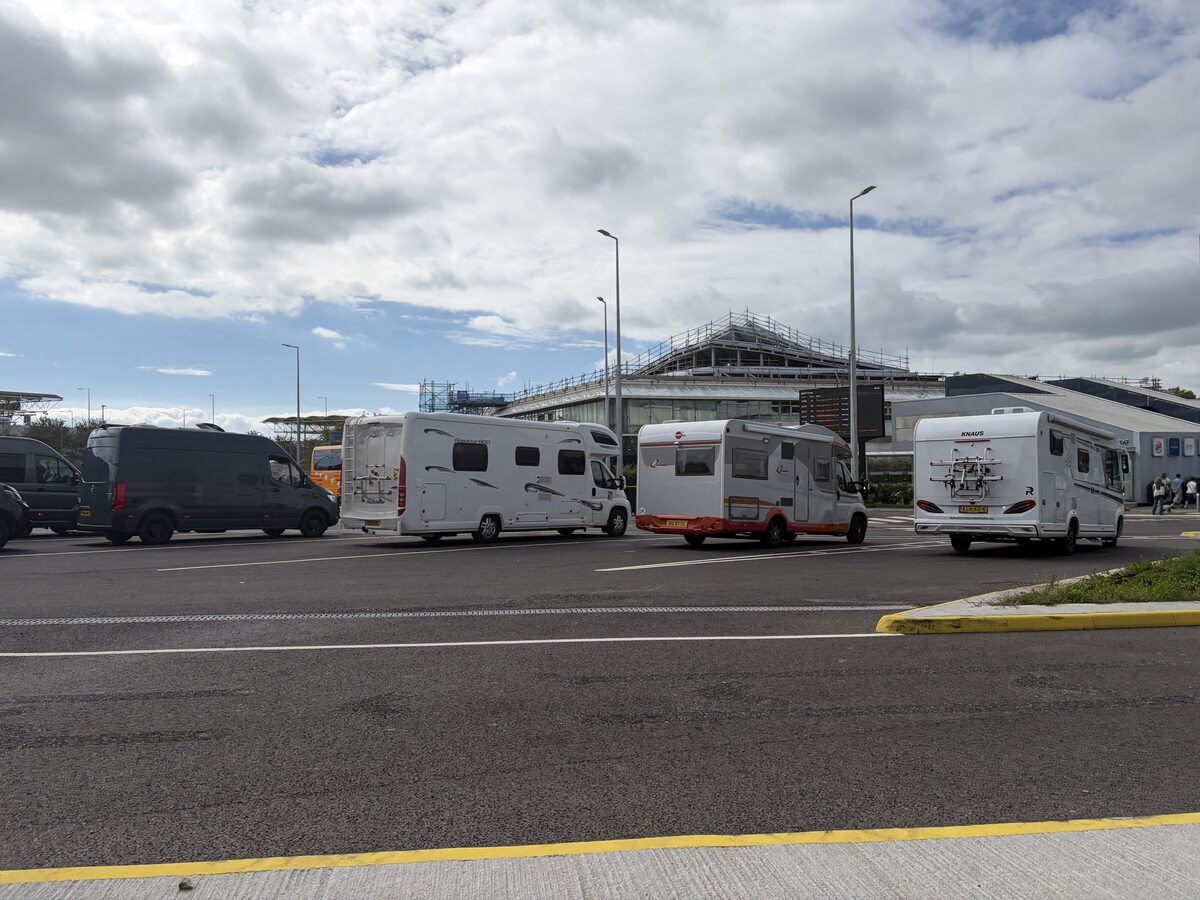
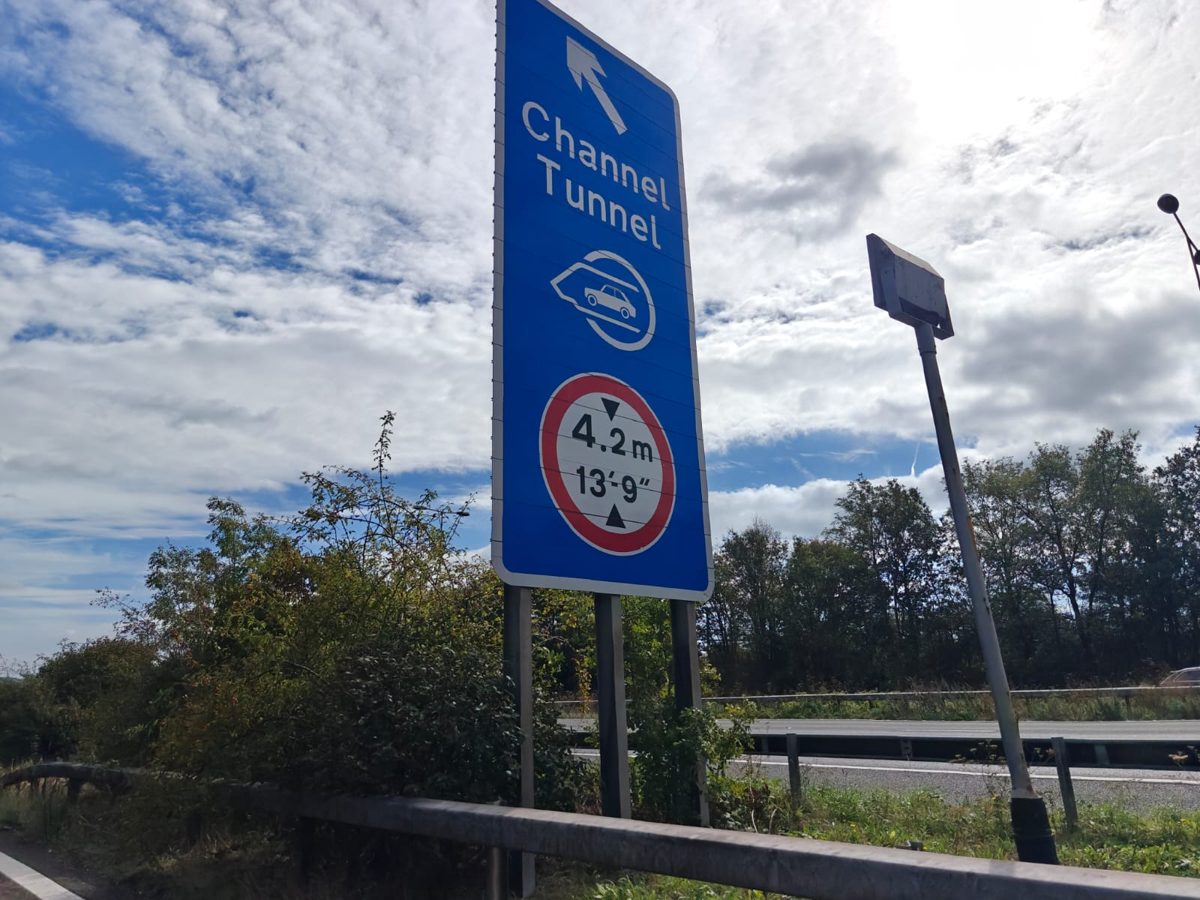
- Booked by size: vehicles over 1.85m tall go in the single-deck carriages. Measure your height and length including roof fittings.
- Maximum length: up to 18 metres in total, including any trailer.
- Gas bottles: you may carry one bottle up to 47kg, or several bottles up to 50kg combined, for domestic use. Bottles must be switched off, filled to no more than 80%, and declared before boarding.
- Fixed LPG tanks for cooking, heating or the fridge are allowed under the same rules and must be switched off during the crossing.
- LPG as engine fuel is banned: campers that run fully or partly on LPG cannot use the tunnel and must take a ferry instead. See Channel Tunnel safety.
- Electric and hybrid vehicles are allowed.
- Pets and documents: pets are welcome when booked (see travelling with pets). Every passenger needs a valid passport, and Advance Passenger Information (API) must be submitted.
Motorhome by tunnel or by ferry?
For a motorhome, the tunnel has clear advantages: you drive forwards in and out with no tight reversing, the crossing is just 35 minutes, and you stay with your vehicle. Ferries can be cheaper on some dates and let you leave the vehicle during a longer sailing, which some travellers prefer for a big trip, and there are often good motorhome and caravan deals on ferry routes. For a full comparison of both options, see Channel Tunnel or ferry.
How to get the best motorhome fare
- Travel midweek. As our price checks show, the camper surcharge is far smaller off-peak, so a Thursday beats a weekend twice over.
- Book early. Larger vehicle spaces are more limited, so book ahead for the best price and availability.
- Book your return together. A return booked in one go unlocks the cheaper short-stay rates. For a touring holiday, compare open returns too.
- Measure accurately. Booking the correct size avoids problems and surprise costs at check-in.
Frequently asked questions
Can you take a motorhome on the Channel Tunnel?
Yes. Motorhomes and campervans are accepted on LeShuttle. Vehicles taller than 1.85m are loaded onto the single-deck carriages designed for larger vehicles. You book by size, just like a car. LPG-fuelled vehicles are not permitted.
How much does it cost to take a motorhome on the Eurotunnel?
More than a car, based on size and day. Our checks showed a mid-sized campervan costing about 1.3× a car on a quiet Thursday, up to about 1.9× at a busy weekend. Enter your dimensions in the module for your exact fare.
How high and long can a motorhome be?
Vehicles over 1.85m go on the single-deck carriages, and the maximum total length is 18 metres including any trailer. Measure including roof fittings and book the right category.
Can I travel with gas bottles in my camper?
Yes, for domestic use: one bottle up to 47kg or several up to 50kg combined. Bottles must be switched off, filled to no more than 80%, and declared at check-in. LPG as engine fuel is not allowed.
Can pets travel with me in the motorhome?
Yes. Dogs and cats can travel in the vehicle with you when booked, provided they meet the pet travel rules. See our pets guide.
Is the ferry cheaper than the Channel Tunnel for a motorhome?
It can be on some dates, and there are often good motorhome deals on ferries, but the tunnel is faster at 35 minutes and easier to board. Compare both in our Channel Tunnel or ferry guide.
Taking your motorhome or campervan through the Channel Tunnel is straightforward: drive into the tall carriage at Folkestone, cross to Calais in 35 minutes staying with your vehicle, and drive straight off onto the motorway. Fares are higher than a car and depend on size and day, our checks showed anything from about 1.3× on a quiet weekday to 1.9× at a busy weekend. Measure your vehicle, travel midweek where you can, and use the price checker above for your exact fare.