
chunnel.co.uk › Terminals & Routes
Channel Tunnel terminals and routes: Folkestone, Calais and driving into Europe
Where the Folkestone and Calais terminals are, how to reach them, and the driving routes from Calais into France, Belgium, the Netherlands and Germany once you are across.
The Channel Tunnel runs between two terminals: Folkestone in Kent and Coquelles near Calais. This guide is your practical route planner, with the exact addresses and sat-nav postcodes for both terminals, how to reach Folkestone by road, and where the A16 takes you once you drive off in France. If you want to know what the tunnel is and how the names fit together, see our Channel Tunnel homepage; for prices and to book, see tickets and prices.
The two Channel Tunnel terminals
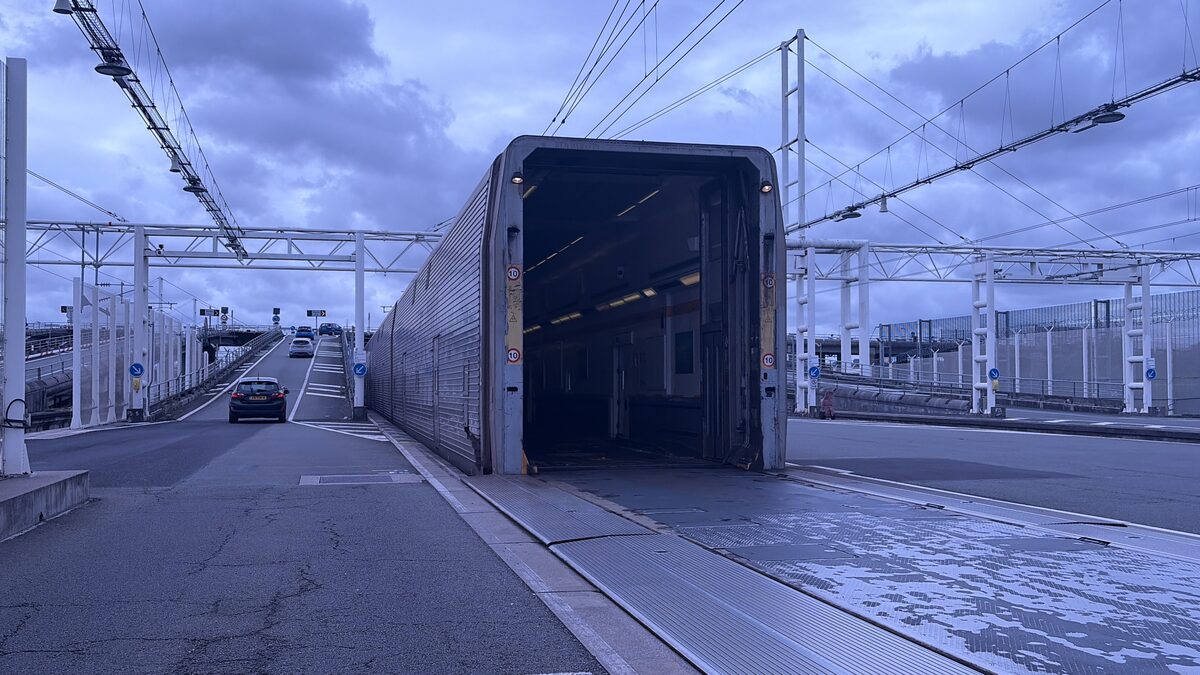
There is one terminal on each side of the Channel. Your car is loaded onto the Eurotunnel LeShuttle train at Folkestone and you cross to Coquelles near Calais in about 35 minutes, staying with your vehicle the whole way. Here are the addresses, postcodes and motorway access for both.
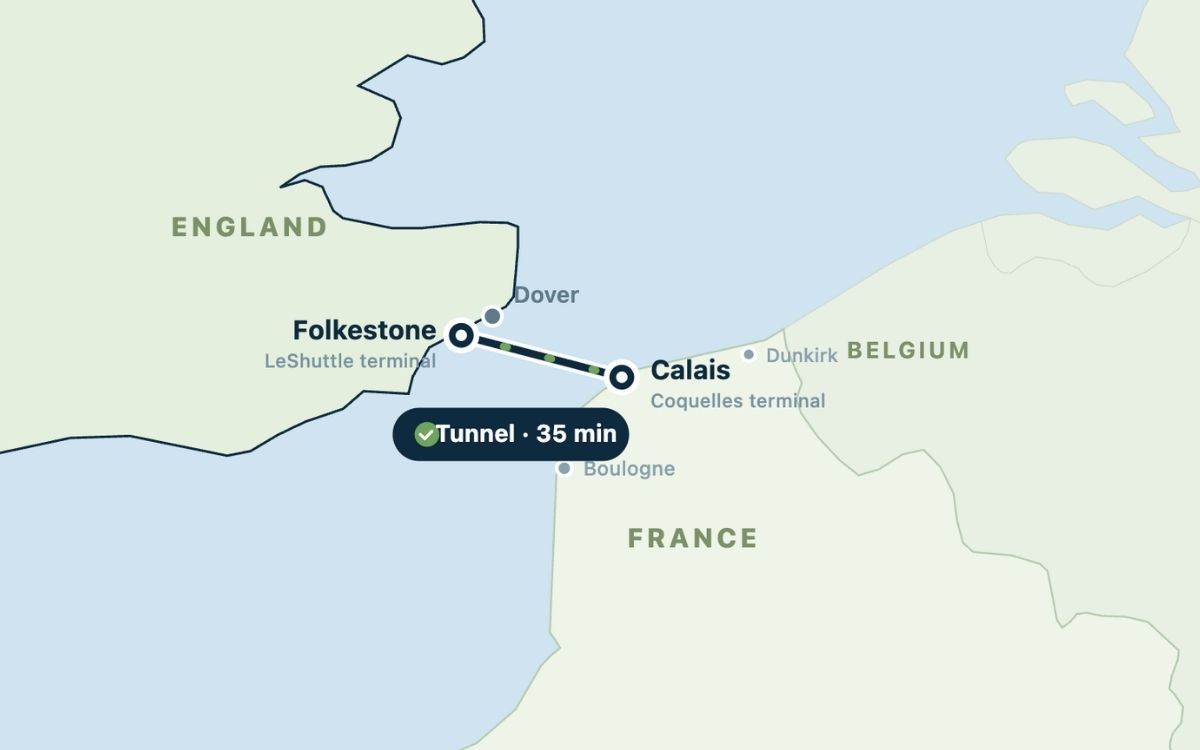
Folkestone terminal (UK)
- Address
- Ashford Road, Folkestone, Kent
- Postcode for sat nav
- CT18 8XX
- Motorway access
- Junction 11A of the M20
- Nearby
- Dover 7 miles, Ashford 10 miles, Canterbury 18 miles
Calais terminal at Coquelles (FR)
- Address
- Rue des Garennes, 62231 Coquelles
- Postcode for sat nav
- 62231
- Motorway access
- Direct link to the A16 and E40
- Nearby
- Calais 3 miles, Dunkirk 24 miles, Lille 70 miles, Paris 185 miles
Getting to the Folkestone terminal
The Folkestone terminal is easiest to reach by car via the M20. From London it is about 70 miles, usually around 1 hour 30 minutes. Drivers from the north and midlands typically take the M25, then join the M20 towards Dover and Folkestone, exiting at Junction 11A. There is no pedestrian access to the Eurotunnel site: you can only board with a vehicle. Folkestone Central and Folkestone West are the nearest rail stations, but foot travellers should use Eurostar from London St Pancras instead.
Where can you drive from the Channel Tunnel?
From the Coquelles terminal near Calais, the A16 motorway gives fast access towards France, Belgium, the Netherlands and Germany. Our detailed route guides give distances, driving times and turn-by-turn directions for the most popular journeys.
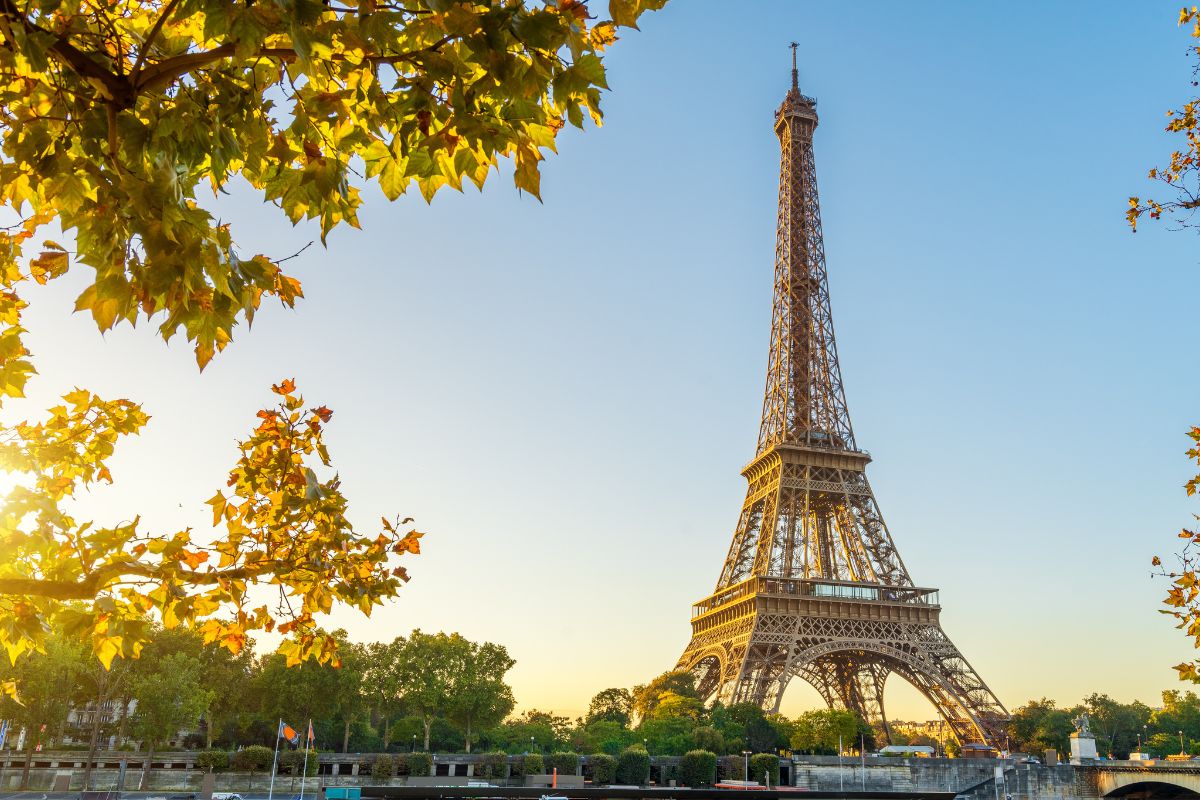 London to ParisThe A16, A26 and A1 route into the capital, about 3 hours from Calais.
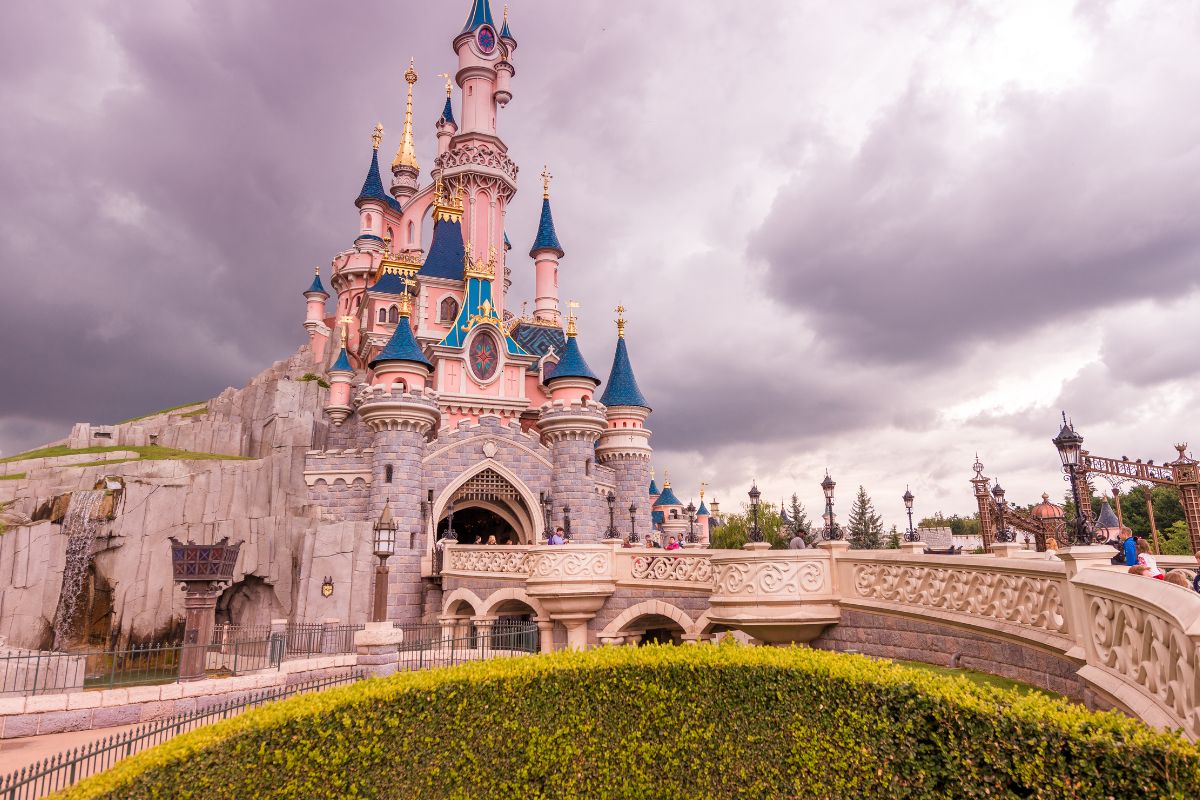 Disneyland ParisFamily-friendly directions to Marne-la-Vallée, just east of Paris.
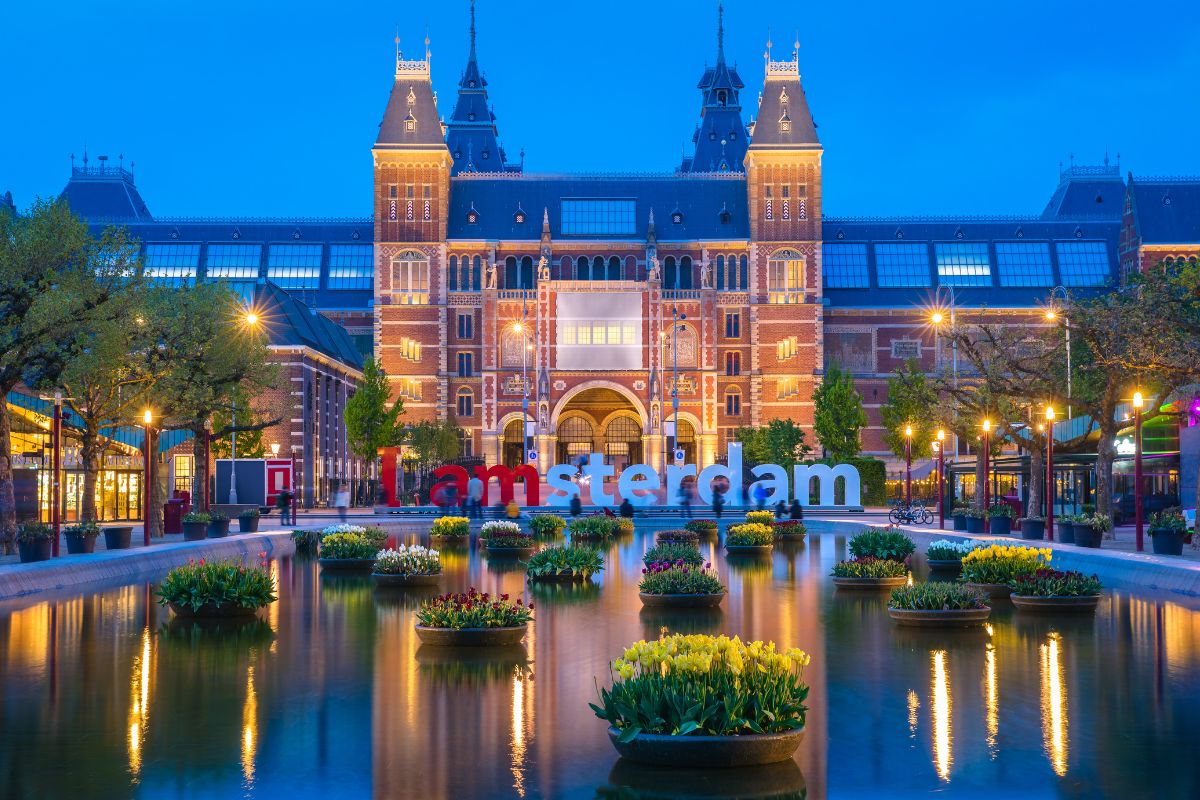 AmsterdamThe route via Ghent and Antwerp, about 4 hours from Calais.
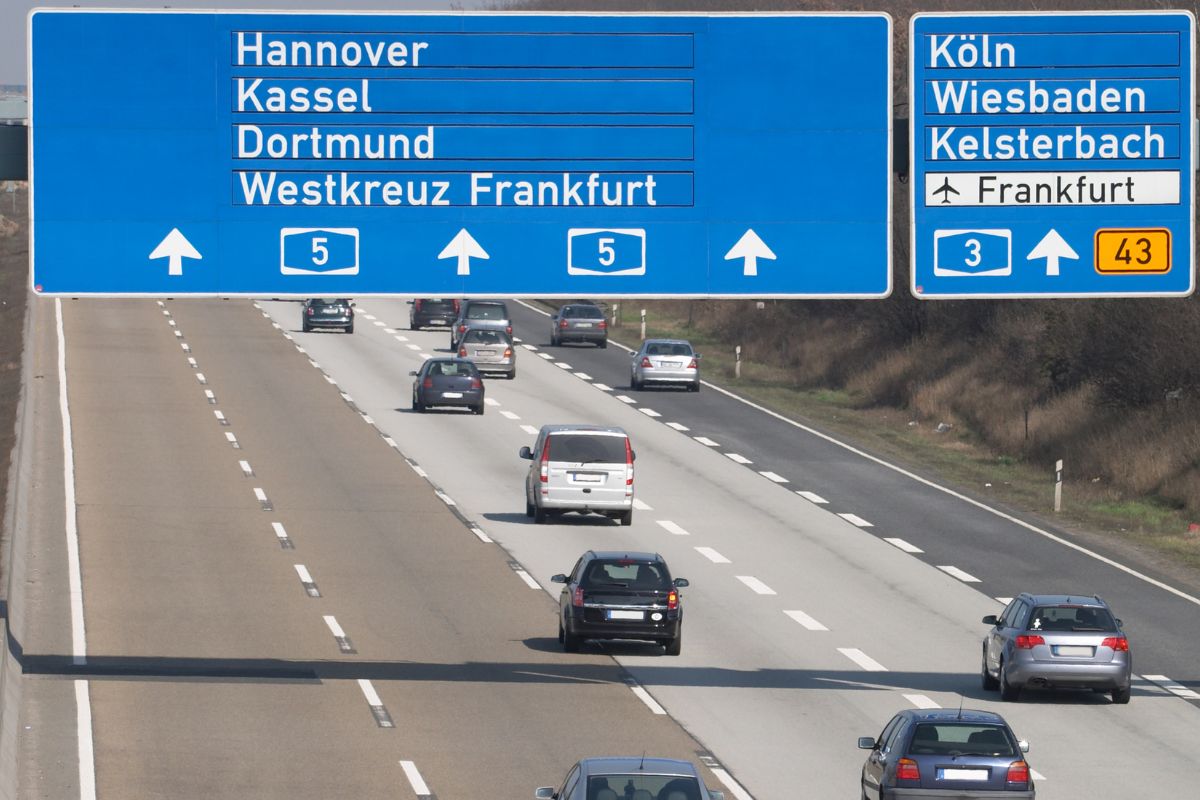 GermanyRoutes through Belgium and Luxembourg, with toll and fuel tips.
What can you take through the tunnel?
Eurotunnel LeShuttle carries almost every kind of vehicle from Folkestone to Calais. You board with your vehicle and stay with it for the crossing. Foot passengers cannot use LeShuttle and travel on Eurostar instead. Use the guide that matches your vehicle.
- Cars, see our Channel Tunnel by car guide.
- Motorcycles, see the motorcycle guide.
- Motorhomes and campers, see the motorhome guide.
- Caravans and trailers, see the caravan guide.
- Coaches, vans and freight, see coaches and freight.
- Bicycles, see the bicycle guide. Travelling with pets? See pets on the tunnel.
What does it cost to cross?
Eurotunnel LeShuttle fares are per vehicle, not per person, and cover up to nine people for the same price. A standard car starts from around £69 for a short-stay return, rising with vehicle size, travel date and how far ahead you book. For every ticket type and live prices, see our Eurotunnel tickets and prices page, or find the lowest fares on our cheap tickets page.
Folkestone terminal or the Dover ferry?
The Folkestone terminal is separate from Dover port, and the two are often confused. Eurotunnel LeShuttle is the tunnel train from Folkestone to Coquelles; the ferries sail from Dover to Calais or Dunkirk. From Folkestone you reach the A16 near Calais after a 35-minute train crossing. From Dover you reach it after about 90 minutes at sea, plus port time. The tunnel is faster and unaffected by the weather, while a ferry can be cheaper on some dates. Compare them fully in our Channel Tunnel or ferry guide.
Terminals and routes: frequently asked questions
Where is the Channel Tunnel terminal in England?
The UK terminal is at Ashford Road, Folkestone, Kent, postcode CT18 8XX, reached directly from Junction 11A of the M20. For sat nav, search for the check-in booth rather than the postcode alone.
Where does the Channel Tunnel come out in France?
The French terminal is at Coquelles near Calais, postcode 62231, with a direct link to the A16 towards Paris, Belgium and the Netherlands.
How do I get to the Folkestone terminal?
By car via the M20 to Junction 11A. From London it is about 70 miles, usually around 1 hour 30 minutes. There is no foot access to the site: you can only board with a vehicle.
Where can you drive to from Calais?
From Coquelles the A16 leads to Paris, Belgium, the Netherlands and Germany. See our route guides for Paris, Amsterdam and Germany.
Is the Folkestone terminal the same as Dover?
No. The Eurotunnel terminal is at Folkestone and uses the tunnel train; the ferries sail from Dover port. They are separate sites about 7 miles apart.
Can foot passengers use the Channel Tunnel?
Not on LeShuttle, which only carries vehicles. Foot passengers travel on Eurostar from London St Pancras instead.
The Channel Tunnel links Folkestone (CT18 8XX, M20 Junction 11A) with Coquelles near Calais (62231, A16). Cross by Eurotunnel LeShuttle in about 35 minutes, then pick up the A16 for Paris, Amsterdam, Germany or Disneyland Paris. For what the tunnel is and how it works, see our homepage; for prices and to book, see tickets and prices.